From evidence to action: reflecting on the IFAS Conference 2026
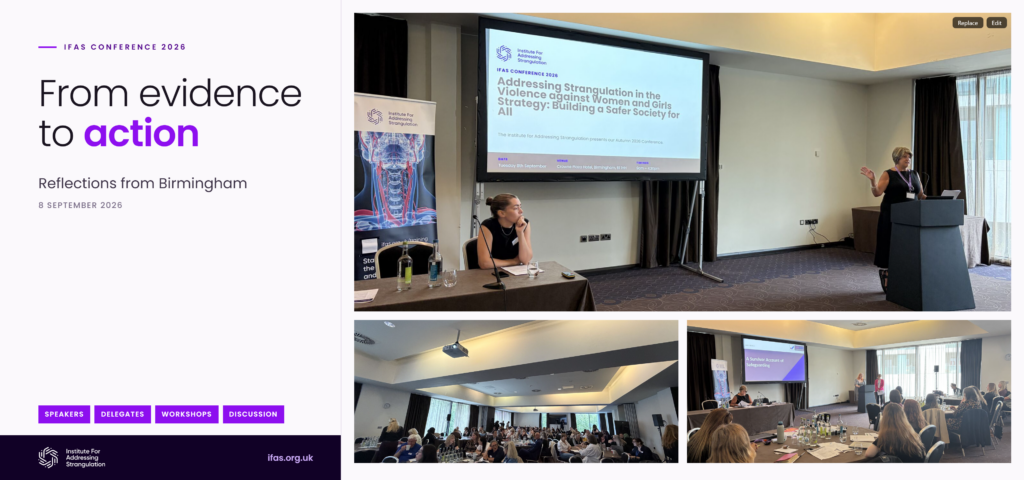
What becomes possible when evidence, lived experience and professional expertise come together — and what happens next?
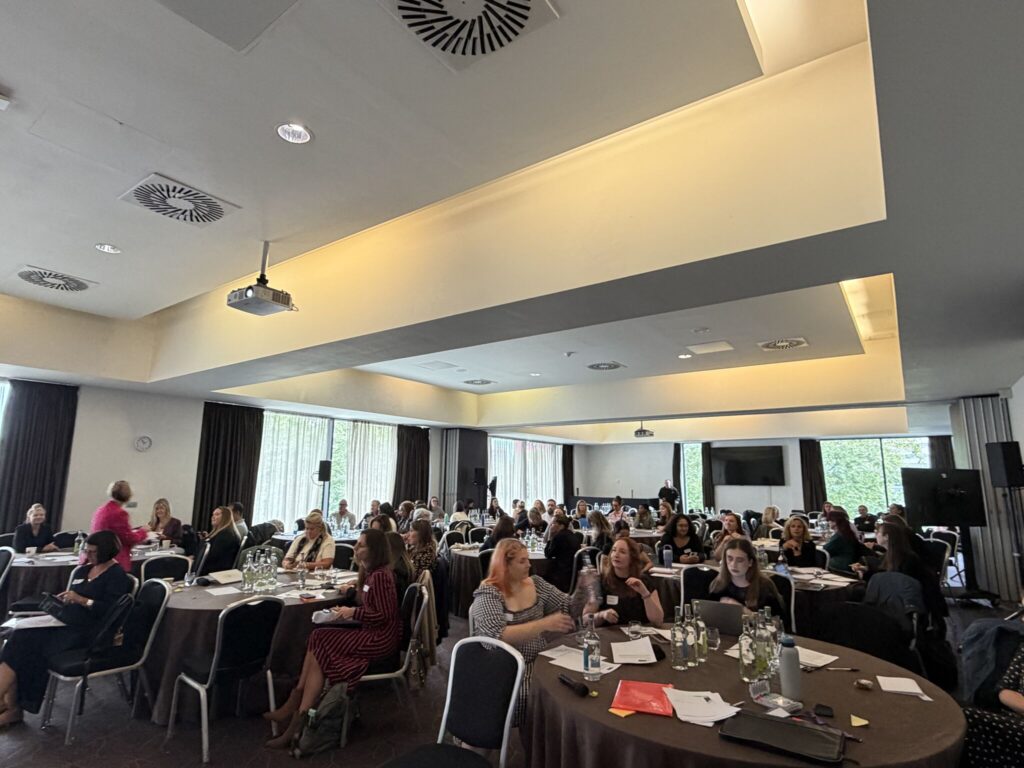
On 8 September, around 150 professionals, researchers, policymakers, practitioners, educators and specialists working across health, criminal justice, violence against women and girls (VAWG), safeguarding and prevention came together in Birmingham for the IFAS Conference 2026.
Under the theme Addressing Strangulation in the Violence Against Women and Girls Strategy: Building a Safer Society for All, the conference brought together research and lived experience, policy and practice, clinical and forensic expertise, criminal justice, education, communications and prevention.
We knew from the outset that this needed to be more than a day of presentations.
The national context for that work was reflected throughout the conference. The Minister for Safeguarding and Violence Against Women and Girls opened the programme, reflecting the growing national recognition of non-fatal strangulation and the importance of strengthening the collective response across health, justice, policing and support services.
Dame Nicole Jacobs, Domestic Abuse Commissioner for England and Wales, also addressed delegates, reflecting on IFAS’s work and impact and the importance of recognition, prevention and continuing to strengthen responses to strangulation. Jess Asato MP later contributed to the programme, bringing a further parliamentary perspective to the discussions.
Those contributions reflected how far the national conversation has moved.
Strangulation is increasingly recognised within legislation, policy and professional practice.
The question running through the conference was: what does that recognition now need to make possible?
Looking back across the conversations that followed, one message stands out.
We know more about strangulation than we did even a few years ago. The challenge now is ensuring that knowledge changes what happens next.
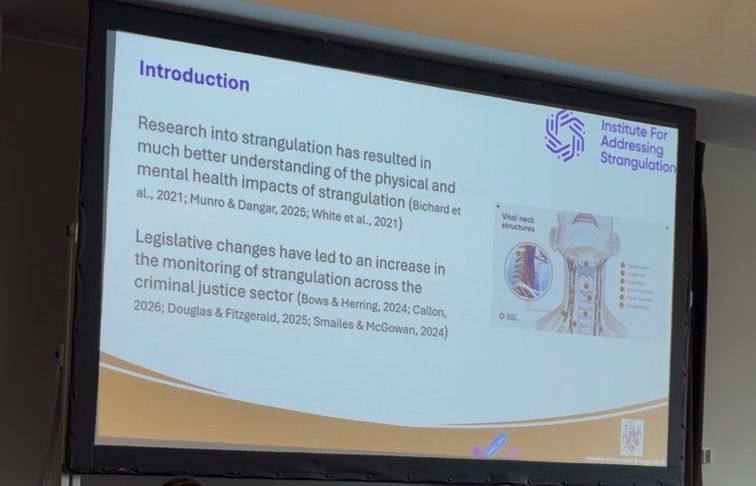
Recognition matters. But recognition must lead somewhere.
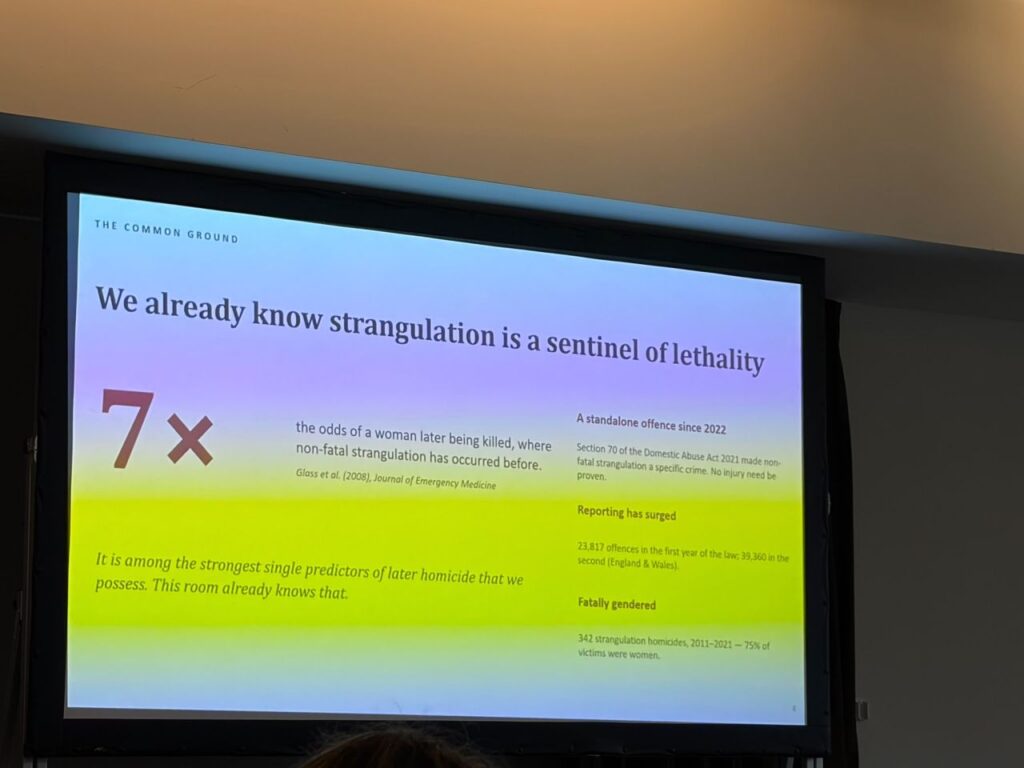
The introduction of a standalone offence of non-fatal strangulation or suffocation in England and Wales in 2022 was an important moment in making a serious and frequently hidden form of violence more visible.
But legal recognition is not, by itself, the end point.
Professor Climent Quintana-Domeque and Professor Sonia Oreffice presented emerging research examining what happens after jurisdictions introduce specific strangulation legislation, including its potential relationship with intimate partner homicide and changes in the recognition and processing of strangulation.
Their analysis also demonstrated why caution matters when interpreting emerging evidence. Early UK findings cannot yet establish a causal effect, and legislation cannot be assumed to operate identically across different jurisdictions and systems.
The broader message was an important one for the conference:
Legal recognition opens a door. What happens after it matters just as much.
Is strangulation identified?
Is it recorded consistently?
Are professionals confident in recognising its significance?
Is appropriate evidence gathered?
Are safeguarding opportunities recognised?
Do people experiencing strangulation receive the health, criminal justice and specialist support response they need?
Legislation creates an important framework. Its impact depends on the systems and people around it.
The evidence we look for can change the response we provide.
One of the strongest threads running through the conference was the importance of recognising harm that may not immediately be visible.
Professor Cath White, Medical Director of IFAS, challenged delegates to think about the clinical and forensic response to strangulation and the disparity that can exist depending on the context in which it occurs.
These were not simply clinical questions.
They raised wider questions about what access to forensic medical assessment and better evidence gathering could mean for safeguarding, investigation and criminal justice outcomes.
Those questions continued through a panel discussion reflecting on criminal justice processes, bringing together perspectives from IFAS, the Crown Prosecution Service and policing. The discussion explored the challenges that can arise as cases move through the criminal justice system and the importance of recognising strangulation, understanding the available evidence and strengthening responses across professional boundaries.
The National Crime Agency also contributed to the conference programme, including a workshop exploring how forensic medical evidence can be used effectively within the courtroom.
That intersection between evidence, health and justice also appeared in new IFAS research presented by Dr Zoe Callon using 20 years of National Crime Agency records.
The study — the first known research specifically focusing on strangulation within stranger sexual offences and homicides — examined a random sample of 5,000 cases. Strangulation was recorded in 12% of the stranger sexual offences examined and 36% of the stranger sexual homicides.
But the context around those figures matters.
The research explicitly cautioned against reinforcing the familiar media stereotype of the “violent stranger”, recognising that stranger sexual violence represents a relatively small proportion of sexual violence and that the wider context of sexual violence must not be lost.
Its recommendations again brought the discussion back to practice: more consistent recording of strangulation, continued research and specialist training to help law enforcement respond to its complexity.
Better evidence matters.
But evidence creates change only when people know how to recognise it, record it and act on it.
Survivor expertise can show us where systems need to change.
Perhaps one of the most important contributions of the day came from a member of the IFAS Survivor Group, who shared their own journey and experience with delegates.
Creating space for lived experience within a professional conference carries responsibility.
Survivor involvement should never mean asking someone to revisit experiences simply to make an event more powerful for an audience. It must have purpose, agency and appropriate support.
For the survivor who contributed in Birmingham, sharing their experience was something they described afterwards as empowering.
That matters.
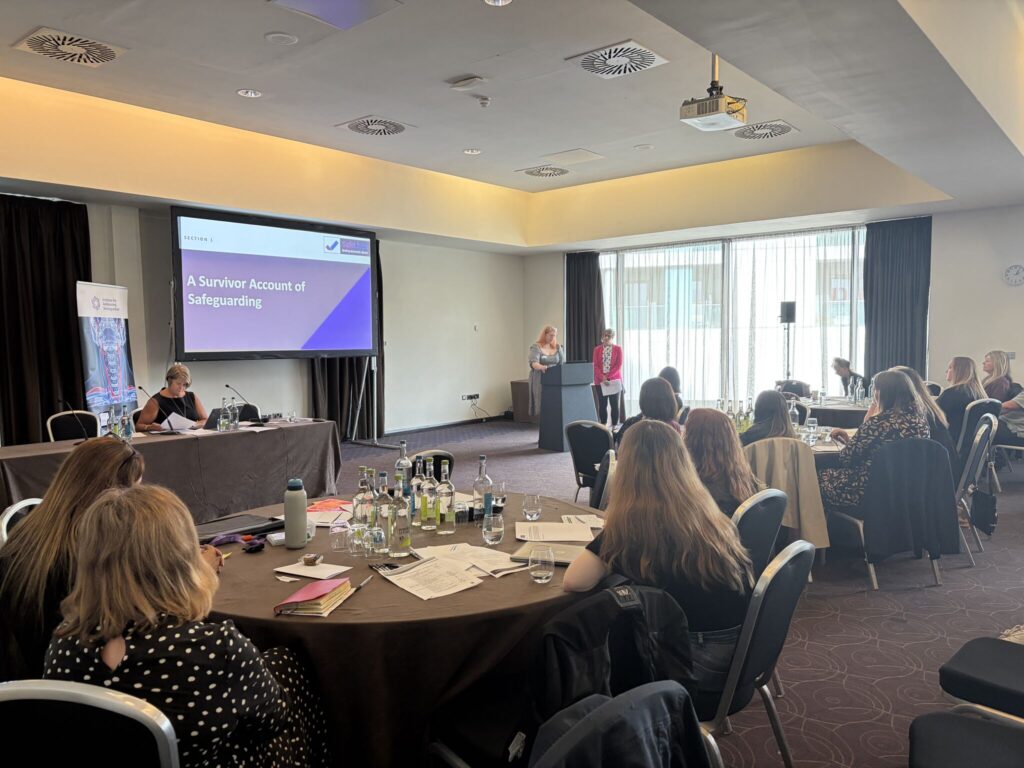
It reminds us that survivor involvement can be more than testimony. When approached safely and meaningfully, lived experience can challenge professional assumptions, identify where opportunities are missed and help shape what a better response looks like.
That principle continued in the SafeLives and IFAS Survivor Voice workshop on improving safeguarding responses to non-fatal strangulation, which was co-created by SafeLives and IFAS Survivor Voice.
Delegates were asked to consider a survivor account through a practical safeguarding lens:
What was the most significant missed opportunity? What should have been asked? What should have been said? What should have happened next?
The session brought those questions into a framework encompassing recognising, asking, responding, reviewing, referring and recording, while keeping multi-agency working, ongoing safeguarding and survivor experience in view.
These can sound like straightforward professional actions.
But whether they happen — and how they happen — can fundamentally alter someone’s experience of a system after disclosure.
Context changes what we are able to see.
Recognition also depends on understanding the context in which violence and coercion occur.
Ameera Jamil, Co-founder and Executive Director of Recultured, explored strangulation within honour-based abuse and cultural coercion.
Her session asked delegates to hold two things simultaneously: honour-based abuse should never become an indictment of a particular religion, nationality or community; but understanding cultural context can be essential to recognising how coercion operates and whether someone is able to identify or disclose what is happening to them.
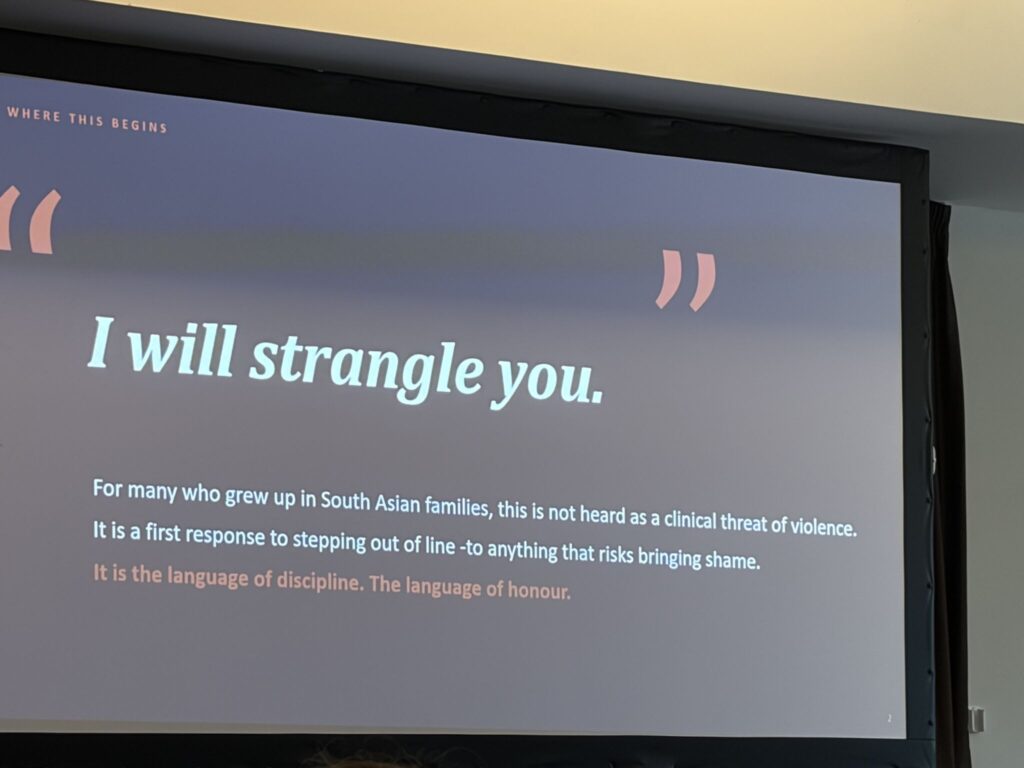
One of the most challenging ideas concerned language itself.
If threats of strangulation have been normalised as the language of discipline within someone’s childhood or family environment, the person experiencing them may not necessarily recognise those words as violence.
That creates another layer of invisibility.
The practical challenge to professionals was therefore to ask about threats as well as acts, avoid interpreting silence as evidence that something did not happen, record people’s own words and build cultural literacy into risk assessment.
Ameera’s closing message captured something much broader than one particular context:
“If we do not understand the context, we risk missing the harm.”
Prevention requires us to enter difficult conversations earlier.
Some of the most complex questions of the day concerned what happens before harm occurs.
Strangulation increasingly exists within wider conversations about sex, pornography, relationships, consent and young people’s understanding of what is normal.
That presents a difficult challenge for educators, parents, professionals and policymakers.
But avoiding those conversations does not mean they aren’t happening.
Drawing on work developed with Associate Professor Emily Setty, Jonny Hunt, Senior Lecturer in Applied Social Sciences – Childhood and Youth Studies at the University of Bedfordshire, delivered a workshop examining how adults can manage challenging conversations about strangulation with young people.
The revised statutory RSHE guidance makes clear that strangulation is dangerous and can cause serious injury or death, while also recognising that pornography can present activities as normal that many people do not engage in and which may be harmful.
Jonny’s workshop pushed the conversation further.
Simply telling young people not to do something is unlikely, by itself, to equip them to navigate relationships, desire, pressure, consent, pornography and risk.
Instead, the session explored the importance of creating safer spaces for difficult conversations, facilitating rather than simply instructing and helping adults become more comfortable with discomfort.
Its final message was simple:
Teaching young people how to think, not what to think.
That principle connected strongly with another conference conversation: the role of media and communications in engaging young people.
Drawing on IFAS’s work with Coronation Street and our collaboration with Tender Education and Arts, we explored what happens when evidence enters the cultural spaces in which conversations about relationships are already taking place.
Popular culture, social media and online content are already influencing how young people understand relationships and sexual behaviour.
The choice is not whether those conversations happen.
It is whether credible, evidence-based voices are part of them.
Communication, approached responsibly, can therefore be more than a way of raising awareness after the work has happened.
It can be part of prevention.
Men and boys must be part of the prevention picture.
Prevention also requires us to consider how we engage men and boys while retaining a clear understanding of the structural nature of violence against women and girls.
The Building Bridges workshop from the End Violence Against Women Coalition and Beyond Equality explored principles for work with men and boys grounded in gender-transformative, intersectional, systemic, relational and accountable approaches.
Its starting point was hopeful: harmful gender norms are learned rather than inevitable, and men and boys are an essential part of creating a different future.
But the workshop also cautioned against reducing prevention to changing individual attitudes or relying on one-off interventions.
Harmful gender norms are reproduced through wider culture, institutions and systems. Work focused only on individuals will therefore have limited impact if those structures remain untouched.
The principles also resist simplistic narratives.
They caution against presenting boys and men as inherently violent, while equally resisting approaches that obscure accountability or the structural realities of VAWG. Instead, they encourage more expansive ideas of masculinity in which vulnerability, connection, care and support are viable and positive ways of being a man.
The premise is important.
Violence is not inevitable.
Harmful norms can change.
And prevention means helping create the social conditions in which equality, respect, care and non-violence can thrive.
No single system can do this alone.
Across the conference, the conversations repeatedly crossed professional boundaries.
Clinical evidence became a criminal justice question.
Criminal justice became a safeguarding question.
Safeguarding became a question about survivor experience.
Research became a question about recording and professional practice.
Young people’s relationships became a question about education, culture, media and prevention.
Work with men and boys became a question about gender norms and systems change.
And policy ran through all of them.
That interconnectedness matters.
Strangulation does not belong exclusively to health, policing, criminal justice, domestic abuse services, sexual violence services, education, research or government.
Progress will be limited if each part of the system develops its response separately.
The conference therefore gave us something that cannot be captured fully in a programme or presentation: an opportunity for people working on different parts of the same problem to hear one another, challenge one another, share evidence and make connections.
The feedback we received reflected the value delegates placed on that breadth.
One delegate described taking away:
“The development of new knowledge and all the incredibly important work IFAS and partners do.”
Across the written responses, delegates also highlighted new research and data, forensic medical assessment, the physical and psychological effects of strangulation, cultural context, networking and collaboration, and approaches to communicating with young people as learning they would take back into their work.
What did delegates tell us?
Feedback from delegates was overwhelmingly positive, reflecting strong levels of satisfaction with the conference, increased understanding of non-fatal strangulation and the relevance of the programme to delegates’ work.
Delegates highlighted new research and data, forensic medical assessment, the physical and psychological effects of strangulation, cultural context, networking and collaboration, and approaches to communicating with young people among the learning they would take back into their work.
Feedback also identified areas where delegates want the conversation to continue, including longer-term physical and psychological effects, forensic medical responses, prevention, pornography and young people, trauma-informed practice, cultural context, education, and the experiences of different parts of the health and criminal justice systems.
Delegates also gave us useful ideas about how future IFAS events could develop. Suggestions included creating more time for interactive discussion and peer learning, making greater use of case studies and practical examples, and continuing to bring a broad range of professional and four-nation perspectives into the programme. We will take that feedback with us as we plan future events.
That feedback gives us something to build on.
From reflection to action
The immediate feedback tells us that delegates valued the conference.
The bigger test is what happens because of it.
One of the clearest messages from Birmingham was that progress cannot happen within individual professional or organisational boundaries.
Better responses to strangulation depend on connections: between research and practice; clinical and forensic expertise and criminal justice; survivor knowledge and safeguarding; education and prevention; evidence and policy.
The next step is to turn those connections into continued collaboration.
For IFAS, that means taking what we heard in Birmingham back into our research, training, clinical and forensic work, survivor engagement, policy relationships, work with young people and communications.
It means continuing conversations with partners across government, criminal justice, policing, health, VAWG, education and research rather than waiting until the next conference to bring those perspectives together again.
It means continuing to strengthen the evidence base around strangulation — while making sure that evidence reaches the people who can use it.
It means supporting professionals not only to know that strangulation matters, but to recognise it, ask the right questions, record it, understand the evidence and respond appropriately.
It means continuing to create meaningful opportunities for survivor expertise to influence the systems intended to support them.
And prevention means entering difficult conversations earlier — with young people, educators, men and boys, media and wider society — without losing sight of the structural inequalities and contexts in which violence occurs.
The conference did not offer a simple answer to all of these challenges.
Nor should it have.
Instead, it brought together perspectives that are too often considered separately and created space to ask harder questions about what needs to happen next.
Because ultimately, the strongest measure of this conference will not be how many people attended, or even how positively they rated the day.
It will be what changes afterwards.
What gets recognised that was previously missed.
What gets asked that previously went unasked.
What evidence reaches a decision-maker or practitioner who can use it.
What conversation with a young person becomes possible.
What survivor encounters a better response.
At the conference, we asked a question that we continue to ask of our communications and engagement:
What did we make possible?
After Birmingham, there is another question to add:
What will we do with that possibility now?
None of this would have been possible without the work behind the day. Our thanks to Bernie Ryan OBE, CEO of IFAS, and Professor Cath White OBE, Medical Director of IFAS, for their leadership in bringing the conference together, and to the whole IFAS team for everything that went into making it happen. We are also hugely grateful to our key partner SafeLives, and to the FFLM team for their support in making the conference possible.
Thank you to every speaker, workshop facilitator, contributor, partner and delegate who joined us for IFAS Conference 2026, and to everyone continuing this work beyond the room.
