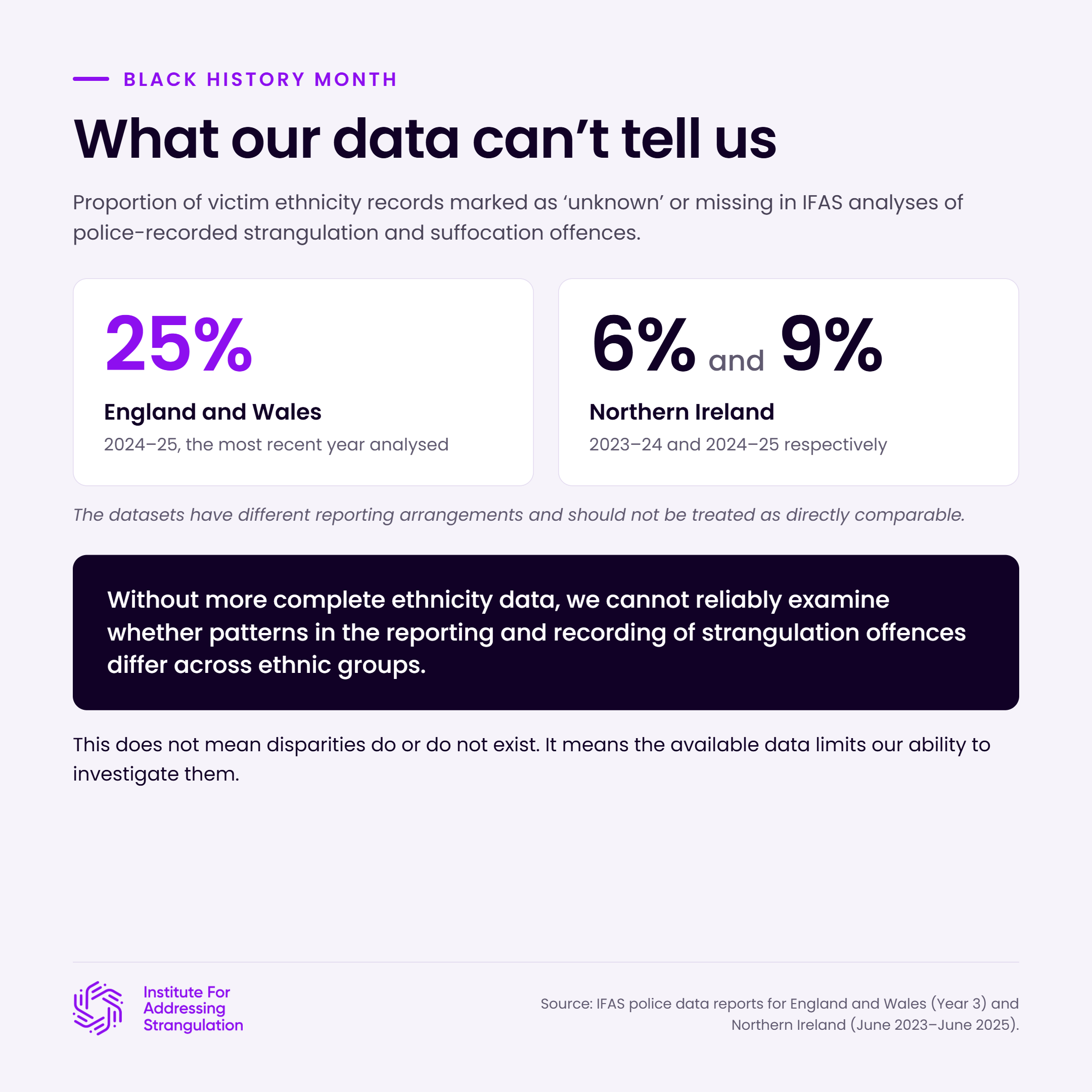
What our data can’t tell us
October is Black History Month, a time to recognise and celebrate Black history, achievements and contributions, while also reflecting on the inequalities that persist. At IFAS, we want to mark the month by acknowledging an important limitation in our own evidence base and why addressing it matters. Across three years of analysing […]
IFAS launches new three-year strategy to address strangulation across the UK
The Institute for Addressing Strangulation (IFAS) has today launched its new IFAS Strategy 2026-2029, setting out the change it seeks to achieve across policy, practice, education, research and public understanding over the next three years. Download → IFAS Strategy 2026-2029 Download → IFAS Strategy Executive Summary The strategy launches at the start of Domestic Abuse […]
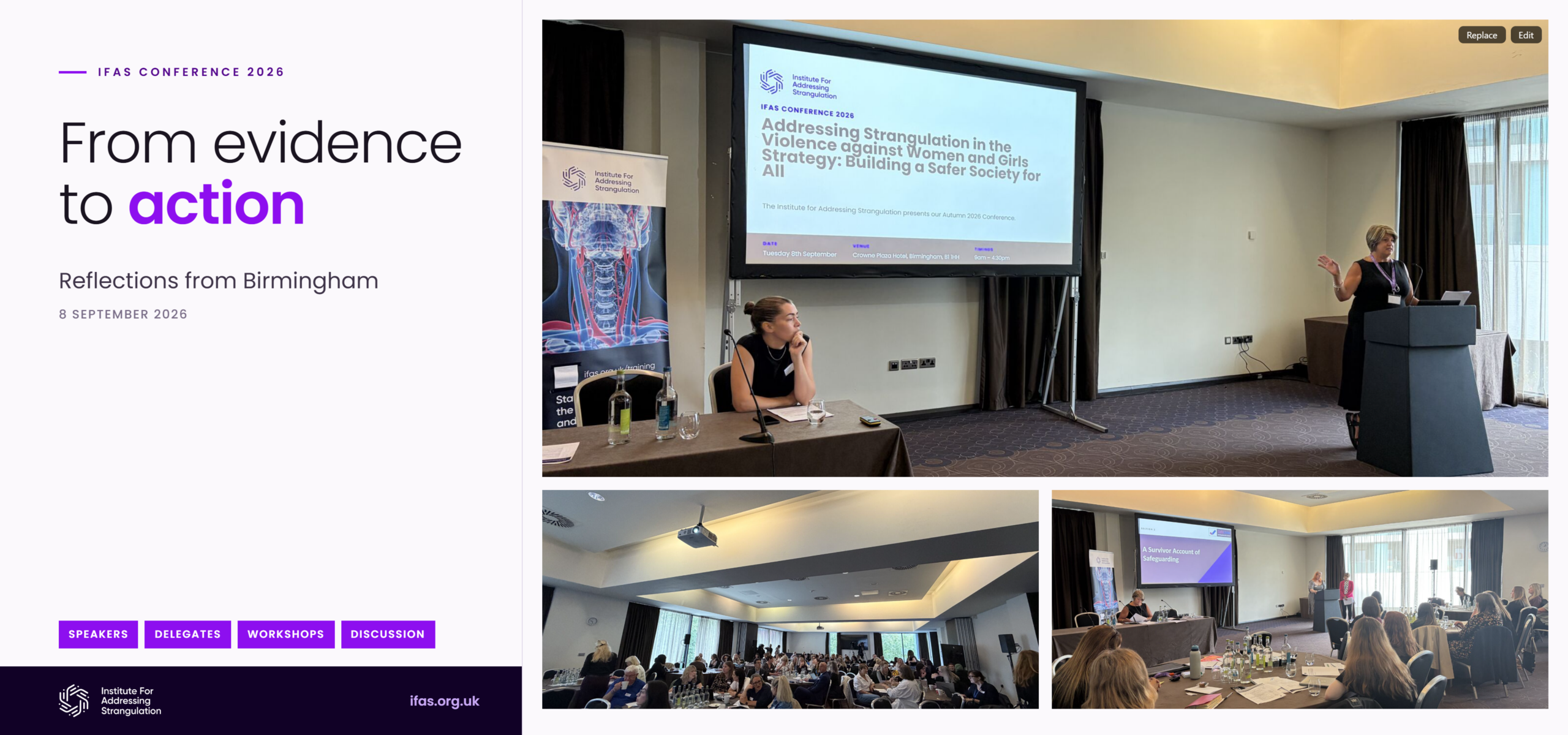
From evidence to action: reflecting on the IFAS Conference 2026
What becomes possible when evidence, lived experience and professional expertise come together — and what happens next? On 8 September, around 150 professionals, researchers, policymakers, practitioners, educators and specialists working across health, criminal justice, violence against women and girls (VAWG), safeguarding and prevention came together in Birmingham for the IFAS Conference 2026. Under the […]
Experts call for stronger, joined-up response to strangulation as national conference brings together Government, criminal justice, health, education and VAWG leaders
IFAS Conference 2026 will examine how evidence, education, policy and professional practice must work together to address strangulation and prevent harm Leading experts from Government, healthcare, criminal justice, research, education and the Violence Against Women and Girls (VAWG) sector will come together in Birmingham on Tuesday 8 September for the Institute for Addressing Strangulation (IFAS) […]
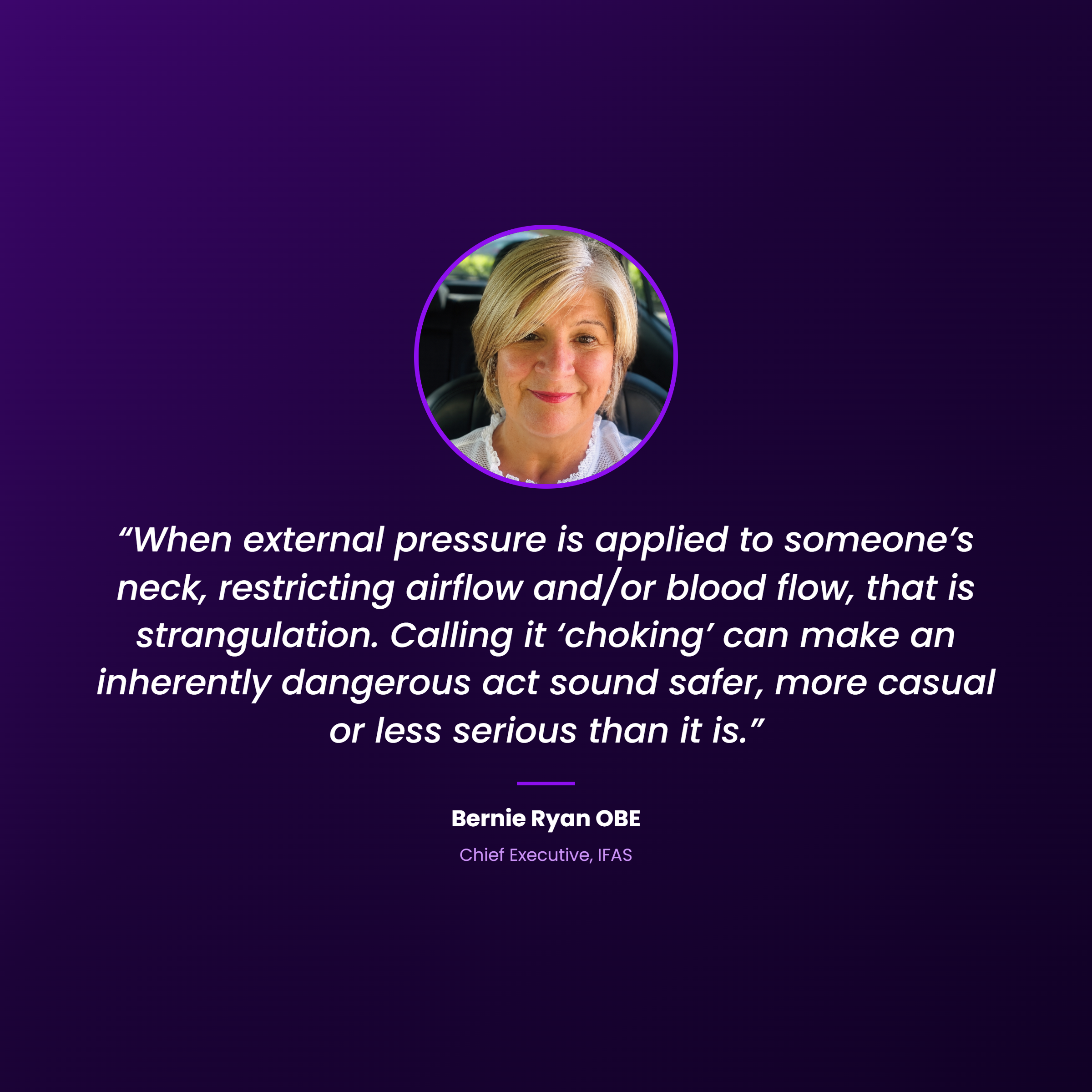
IFAS statement on the death of a 16-year-old girl in Sydney and the language used to describe strangulation during sex
The Institute for Addressing Strangulation (IFAS) is deeply saddened by reports of the death of a 16-year-old girl in Sydney, Australia, following an incident that is being investigated by police and has been reported as involving suspected strangulation during sex. Our thoughts are with her family, friends and community. While the circumstances and cause of […]
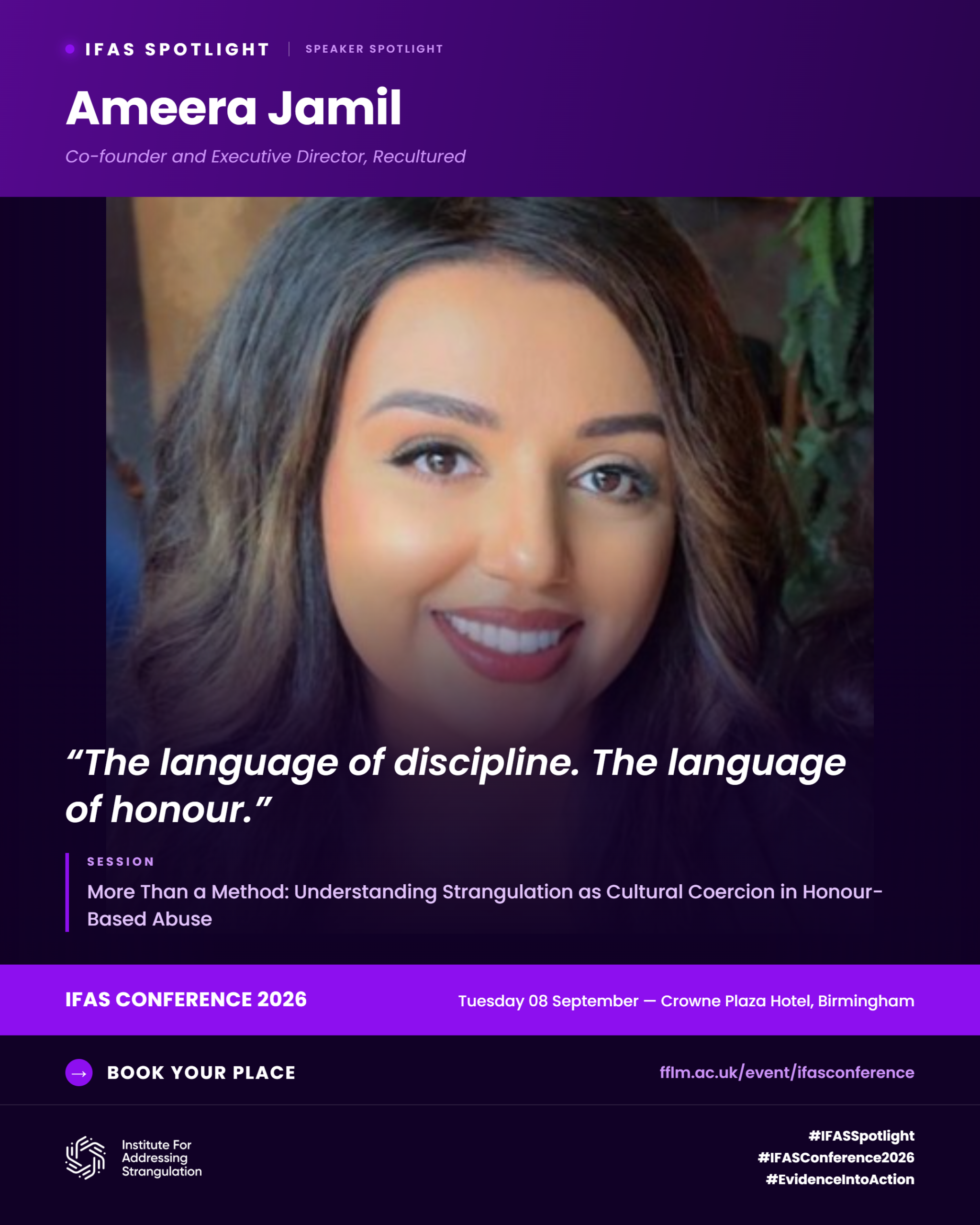
More Than a Method: Understanding Strangulation as Cultural Coercion in Honour-Based Abuse
What happens when the threat of strangulation is so embedded within a language of control that the person experiencing it may not even name it as violence? At the IFAS Annual Conference 2026, Ameera Jamil, Co-founder and Executive Director of Recultured, will bring an important and often overlooked perspective to the conversation about […]
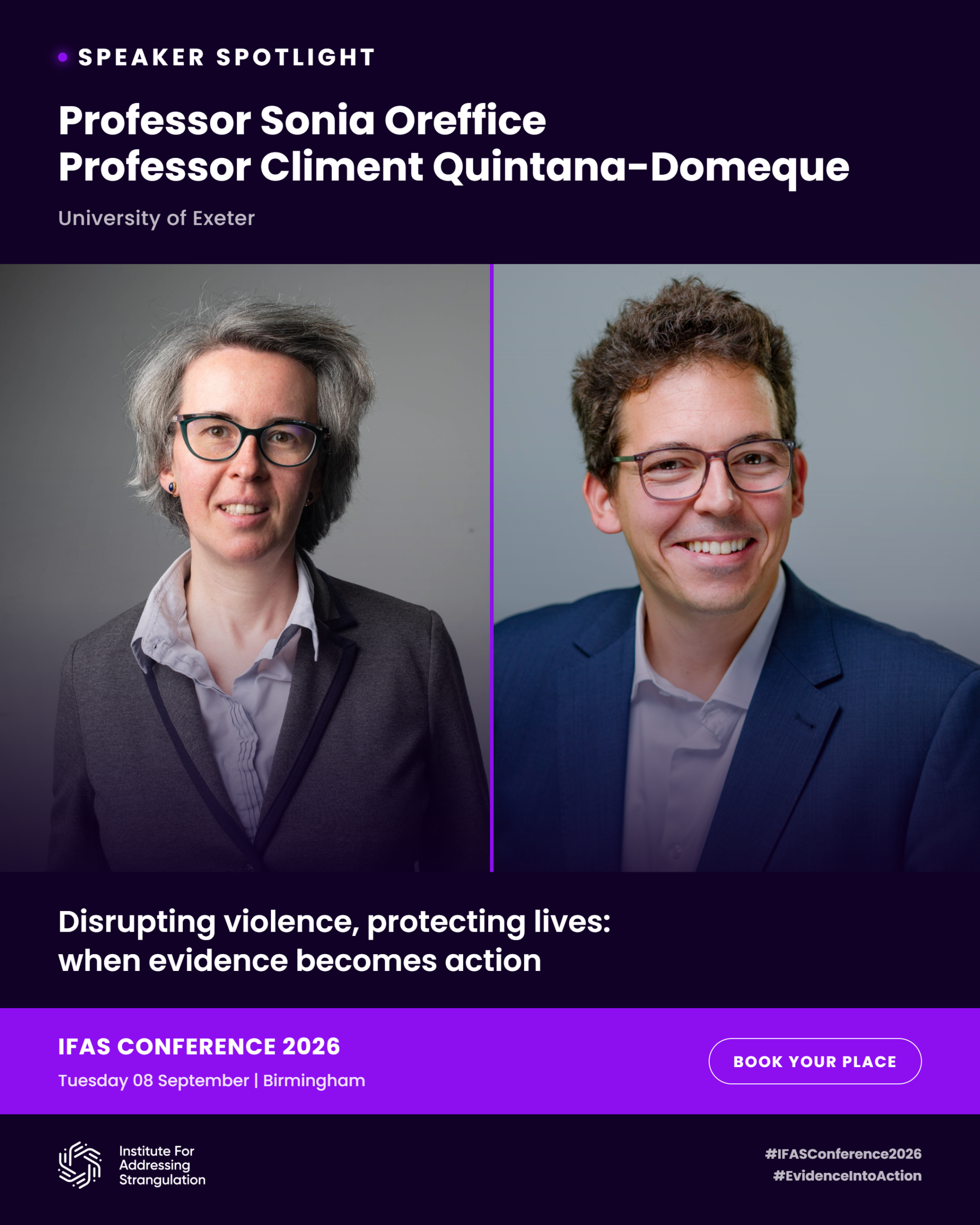
Disrupting violence, protecting lives: when evidence becomes action
“I am incredibly grateful to survivors for speaking up, for showing and emphasising what is not working well in the justice system.” For Professor Sonia Oreffice, survivors’ experiences are not separate from research into violence. They are fundamental to understanding what systems miss, and to changing them. Speaking ahead of the IFAS Conference 2026, […]
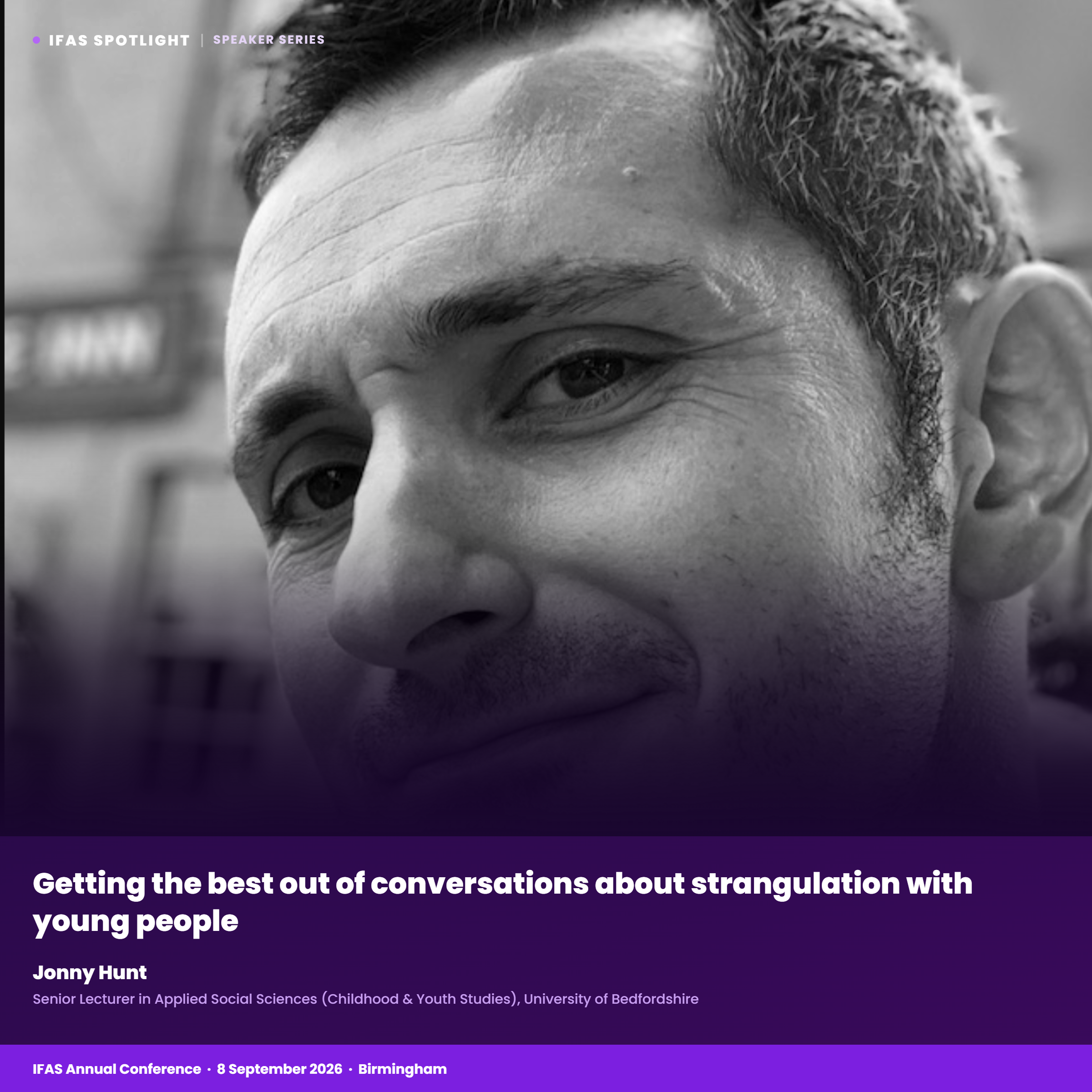
Creating Space for Better Conversations
For more than two decades, Jonny Hunt has spent his career doing something many people would shy away from: walking into classrooms and having honest conversations with young people about relationships, consent, masculinity, sexuality and the questions they are often afraid to ask.

Northern Ireland Strangulation and Asphyxiation Offences June 2023 – June 2025
Key Findings: – 1,974 strangulation and asphyxiation offences were recorded by the Police Service Northern Ireland in the first two years of the legislation – Offences rose from 906 in Year 1 (2023–24) to 1,068 in Year 2 (2024–25) – When adjusted for population size, PSNI recorded a lower average of offences than England […]
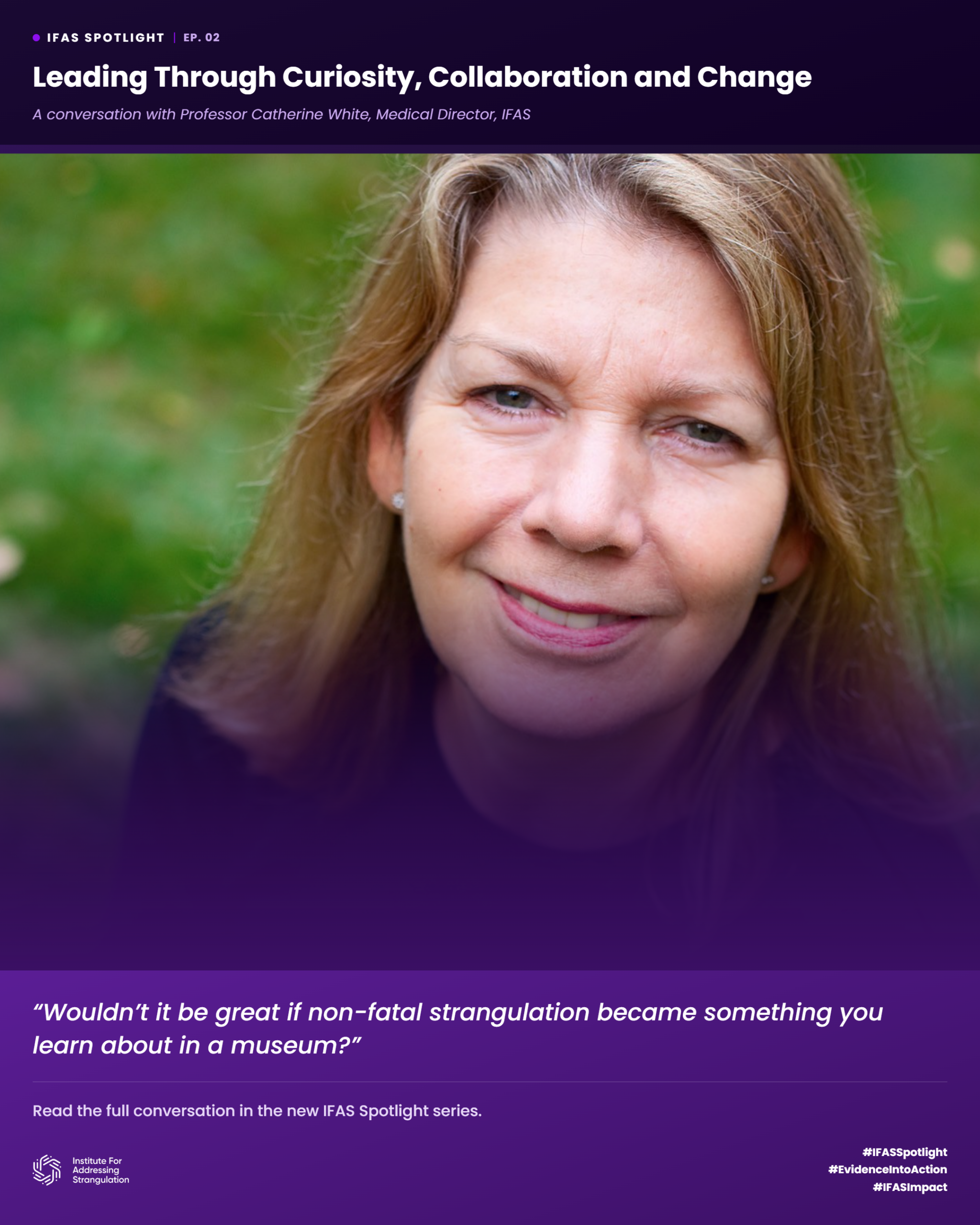
Leading Through Curiosity, Collaboration and Change: Professor Catherine White’s Vision for IFAS
Highlighting the people, partnerships and ideas shaping research, practice and prevention. As part of our new IFAS Spotlight series, we sit down with the people, partners and professionals helping shape the future response to strangulation. Through these conversations, we explore the experiences that have shaped their careers, the challenges they see today, and […]
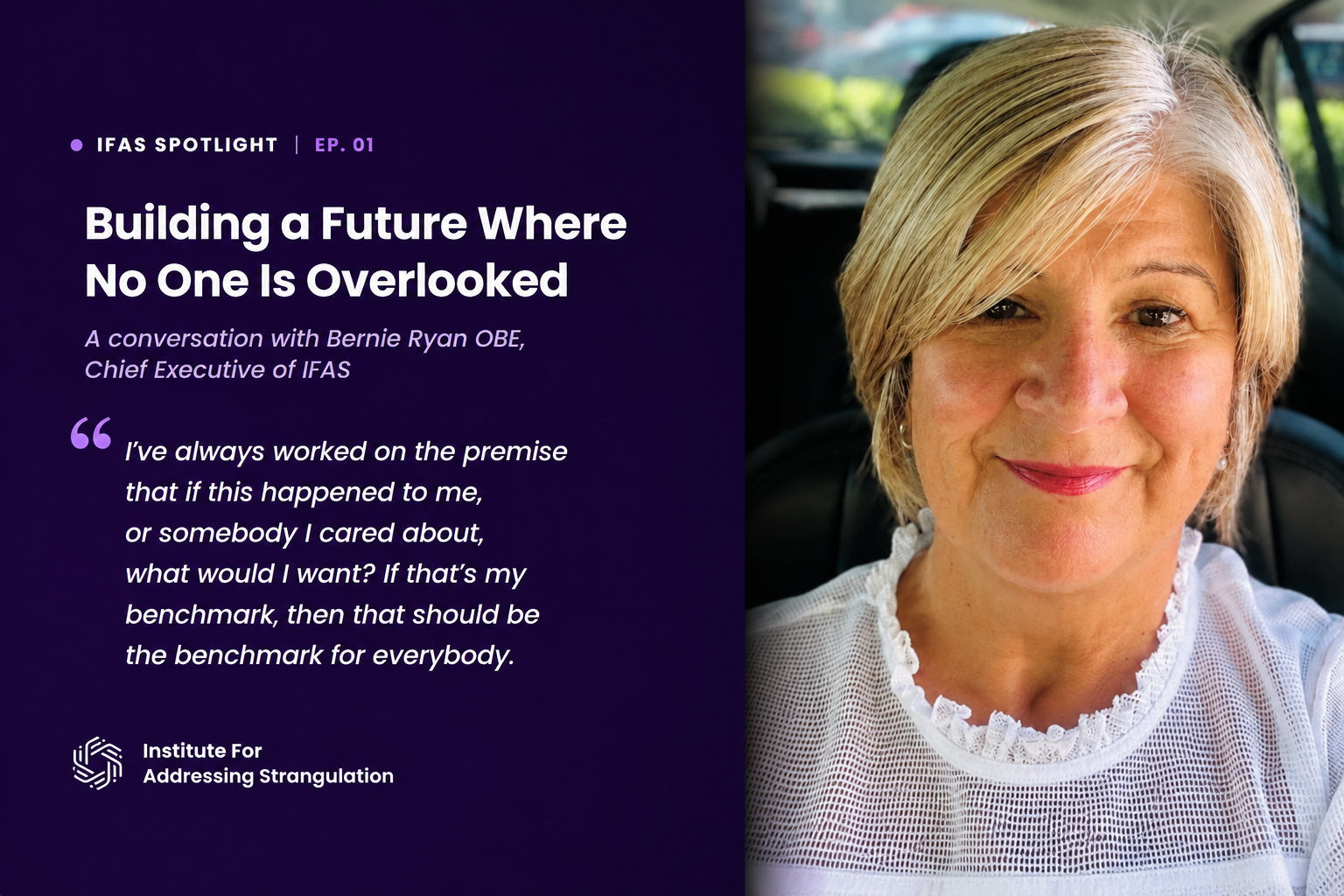
Building a Future Where No One Is Overlooked
A conversation with Bernie Ryan OBE, CEO of IFAS For Bernie, improving the response to victims and survivors has never been about one organisation, one profession or one part of the system. It has always been about bringing people together to understand problems better, listen more carefully and create lasting change. After spending […]

First UK-wide clinical guidelines for paediatric non-fatal strangulation launched to transform the clinical response
The Institute for Addressing Strangulation (IFAS) has published the UK’s first clinical guidelines specifically for the management of non-fatal strangulation in children and young people under 16, closing a significant gap in clinical practice and providing dedicated guidance for healthcare professionals for the first time.
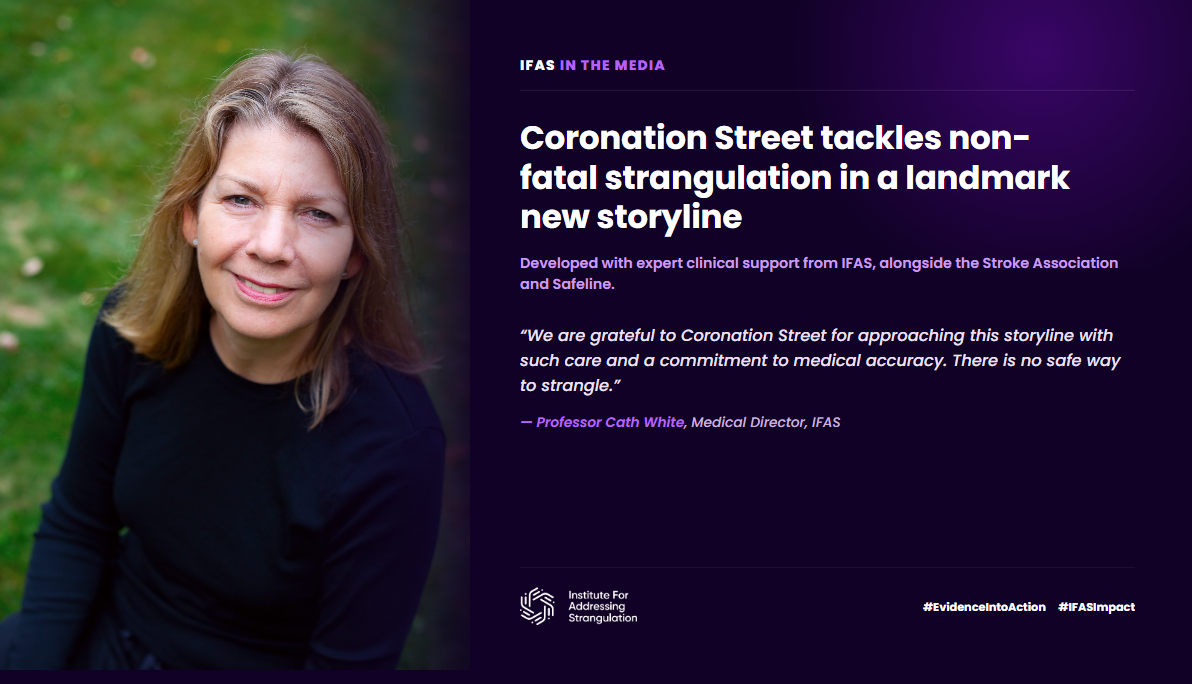
Coronation Street tackles non-fatal strangulation in landmark storyline developed with expert support from IFAS
ITV’s Coronation Street is shining a spotlight on the hidden dangers of non-fatal strangulation through a new storyline developed with expert support from the Institute for Addressing Strangulation (IFAS). The storyline follows Betsy (played by Sydney Martin), who suffers a stroke after being strangled by her partner Dylan (Liam McCheyne) during […]

Rise in strangulation charges highlights CPS commitment to tackling domestic abuse
IFAS Statement Responding to the latest CPS data on strangulation charges, the Institute for Addressing Strangulation (IFAS) said the increase reflects growing recognition of the seriousness and risk associated with this offence, and the importance of identifying strangulation early within patterns of abuse. Recent IFAS research continues to show that strangulation is often misunderstood, minimised […]

The Institute for Addressing Strangulation (IFAS) welcomes the Government’s landmark Violence Against Women and Girls (VAWG) strategy
Funded by the Home Office, IFAS has been working to address strangulation as a specific and highly dangerous form of VAWG. In partnership with SafeLives, we have trained over 20,000 frontline professionals to recognise and respond to strangulation, improving outcomes for victims and raising awareness of its seriousness. Yet we know there is much more […]

Survivors of strangulation are being let down when they turn on their TVs
By applying pressure to the neck – a vulnerable area – and restricting someone’s breath, you are showing you have final say over whether they live or die. That’s why I want to see more scenes in popular culture of strangulation that take it seriously in domestic abuse contexts. Because the stats are truly sobering.

Why I Can’t Escape Non- Fatal Strangulation
Some types of abuse can be hard to decipher or define whilst you are in the relationship. And sometimes even afterwards toxic and controlling behaviour is very difficult to explain out of the context of the situation.

Let’s Talk About Strangulation
CEO, Bernie Ryan reflects on strangulation in different contexts and the subsequent implications for those who might come into contact with anyone who has experienced strangulation. This piece highlights the need for a whole systems approach to strangulation in the UK.

Strangulation as Entertainment? The Normalisation of Violence Against Women on Screen
A piece written by the team at IFAS, highlighting the normalisation of strangulation towards women in mainstream media and its implications.

Overcoming Challenges in Strangulation Research
A piece written by research officer Harriet Smailes, discussing the complexities of research that focuses on strangulation.

My experience of what I now call ‘Non Visible Strangulation’
A written experience on strangulation which highlights the difficulties that survivors face in accessing effective treatment and support where injuries related to strangulation are non-visible.

Julie’s Experience
A blog written by Julie about her journey of surviving a violent assault, shedding light on the delayed recall and lasting impact of strangulation trauma.
